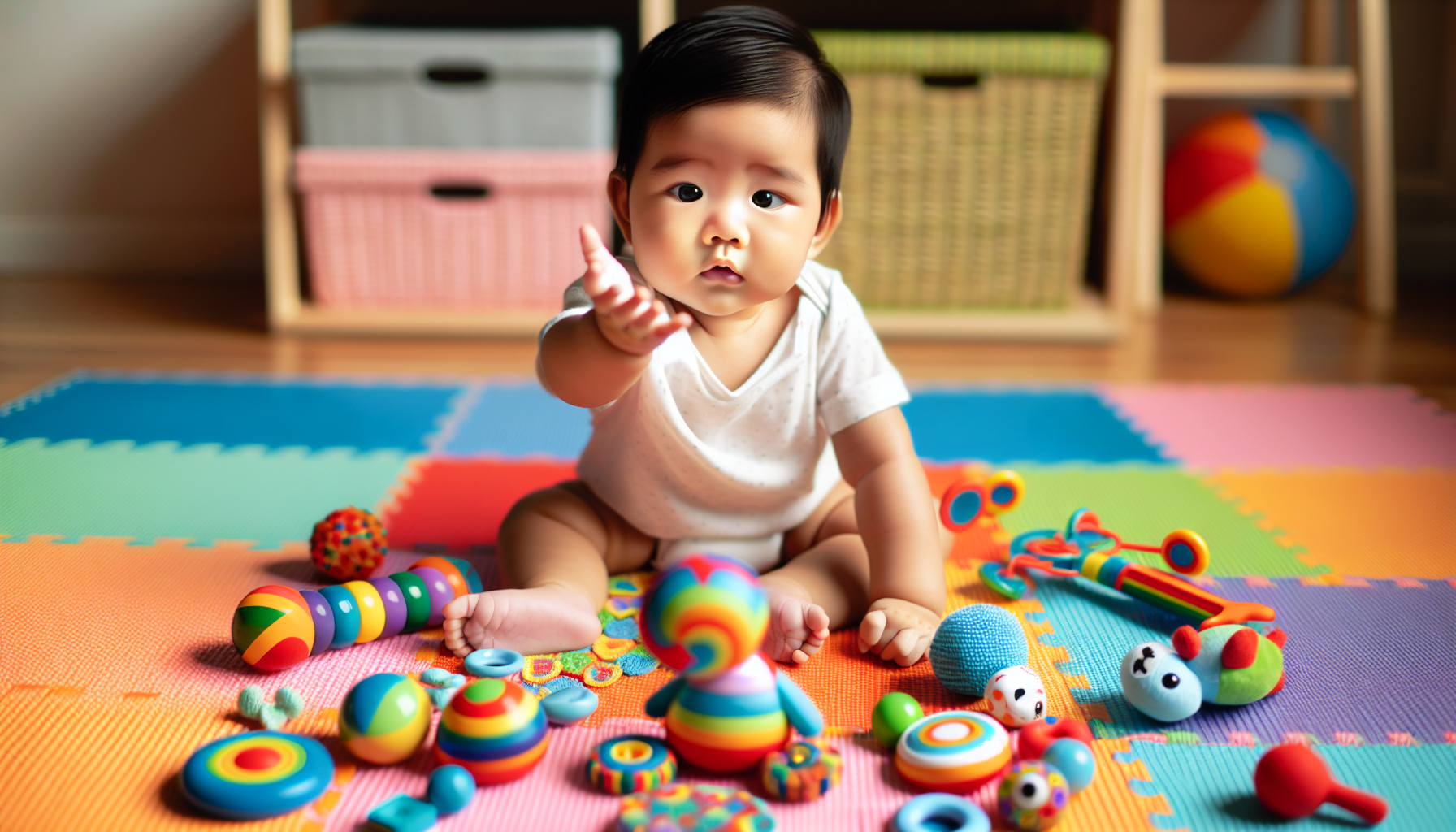
As a parent, you may be wondering when your baby will start to recognize and learn colors. This is a common question, and the answer is that it happens sooner than you might think! In this article, we’ll explore how babies learn colors and what you can do to support their learning. Babies are born with a basic ability to see colors, but their color recognition skills develop gradually over time. According to the American Academy of Pediatrics, most babies can distinguish between red, green, blue, and yellow by the time they are 5 months old. However, it’s not until they are around 18 months old that they can name these colors. So, how do babies learn colors? It all starts with their experiences in the world around them. Babies are naturally curious, and they learn by observing and interacting with their environment. When it comes to color recognition, babies are drawn to bright, bold colors that stand out from the rest. This is why toys and books for babies are often brightly colored. As babies grow and develop, they begin to categorize colors and make connections between them. For example, they may notice that the green grass is similar to the green leaves on the trees. This is an early form of color recognition that lays the foundation for more advanced color learning as they get older. There are many things you can do to support your baby’s color recognition skills. Here are a few ideas: 1. Provide a colorful environment: Surround your baby with a variety of colors to stimulate their senses and encourage their natural love for color. This can be as simple as hanging colorful artwork on the walls or providing a basket of brightly colored toys. 2. Talk about colors: As you go about your day, point out different colors to your baby and talk about them. For example, you might say, “Look at the red apple” or “The blue sky is so pretty today.” 3. Read books with bright, bold colors: Books with bright, bold colors can help babies learn to recognize and name colors. Choose books with large, colorful illustrations that are easy for your baby to see and focus on. 4. Play with colorful toys: Toys that are brightly colored can help babies learn to recognize and categorize colors. Look for toys that have a variety of colors and that are appropriate for your baby’s age and developmental stage. 5. Encourage exploration: As your baby grows and develops, encourage them to explore their environment and discover new colors. This can be as simple as taking a walk outside and pointing out different colors in nature. Learning colors is an important part of a child’s development. It can help them make connections between objects, understand their environment, and express themselves. For example, a child who can name colors may be able to describe an object in more detail, such as “I have a yellow ball.” Additionally, learning colors can help children develop their memory and problem-solving skills. For example, if a child is looking for a blue toy, they may need to remember what the toy looks like and search for it among other toys. Color recognition is an important part of a baby’s development, and it lays the foundation for more advanced color learning as they get older. By providing a colorful environment, talking about colors, reading books with bright illustrations, playing with colorful toys, and encouraging exploration, you can support your baby’s color recognition skills and help them learn and grow.Babies and Color Recognition: A Guide for Parents
Color Recognition in Babies: What You Need to Know

Supporting Your Baby’s Color Recognition Skills
The Benefits of Learning Colors for Kids
Conclusion
(750 words)