
How Babies Learn Colors
=====================
As a parent, you may have noticed that your baby has been showing a lot of interest in colors. From the time they are born, babies start to learn about the world around them, and colors are an essential part of that learning process. Here’s how babies learn colors and how you can help them along the way.
Color Recognition in Babies
—————————-
Babies begin to recognize colors as early as 2-3 months of age. At this stage, they are more likely to notice bright and contrasting colors like black, white, and red. As their vision improves, they begin to distinguish between other colors like blue, green, and yellow. By the time they reach their first birthday, most babies can recognize and name basic colors like red, blue, yellow, and green.
How Babies Learn Colors
———————–
Babies learn colors through exposure and repetition. They learn to associate objects with specific colors and start to categorize them. For example, when a baby sees a banana, they learn that it is yellow. The more they see and interact with objects of different colors, the more they learn about them.
Here are some ways babies learn colors:
### 1. Through Play
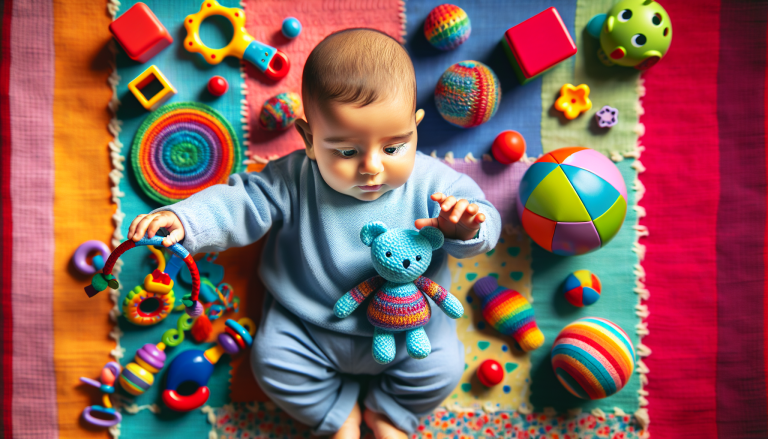
Play is an essential part of a baby’s development, and it’s also an excellent way for them to learn about colors. Providing your baby with toys that have different colors, shapes, and textures can help them learn to recognize and name colors.
### 2. Reading Books
Reading books is another excellent way for babies to learn about colors. Picture books with bright and contrasting colors can help babies distinguish between different colors. You can also label the colors in the book to help your baby learn their names.
### 3. Talking About Colors
Talking to your baby about colors can help them learn to recognize and name them. For example, you can point out different colors in their environment, like the sky being blue or the grass being green. You can also label objects with their colors, like “the red ball” or “the yellow duck.”
### 4. Playing Outside
Playing outside can also help babies learn about colors. The natural environment has a wide range of colors that can help babies distinguish between different shades and hues.
### 5. Art Activities
Art activities like painting, drawing, and coloring can help babies learn about colors. These activities can help babies learn to mix and match colors and understand how they can create new colors.
Tips for Helping Babies Learn Colors
————————————
Here are some tips to help your baby learn about colors:
### 1. Use Bright and Contrasting Colors
Babies are more likely to notice bright and contrasting colors. Using these colors in toys, books, and other objects can help your baby learn to recognize and name colors.
### 2. Repeat Colors Often
Repetition is crucial when it comes to learning. Repeating colors often can help your baby remember them and learn to associate objects with specific colors.
### 3. Use Simple Language
When talking to your baby about colors, use simple language. Instead of saying “magenta,” say “pink.” This will help your baby learn the names of colors more easily.
### 4. Encourage Exploration
Encourage your baby to explore their environment and the objects in it. This will help them learn about colors and other properties of objects.
### 5. Be Patient
Learning takes time, and every baby is different. Some babies may learn colors faster than others. Be patient and give your baby time to learn at their own pace.
Conclusion
———-
Learning colors is an essential part of a baby’s development. Through exposure, repetition, and play, babies can learn to recognize and name colors. As a parent, you can help your baby learn about colors by using bright and contrasting colors, repeating colors often, using simple language, encouraging exploration, and being patient. With time and practice, your baby will be a color recognition expert.