
How Babies Learn Colors
=====================
As parents, we want to support our children’s development in any way we can. One important aspect of a child’s development is learning colors. Color recognition is a crucial part of a child’s cognitive and emotional growth. Here’s how babies learn colors and some tips for helping them along the way.
Babies Start Seeing Colors at Birth
———————————–
While newborns can only see in black and white, they start to see colors by around 1-2 months of age. At first, they may only be able to distinguish between high-contrast colors like black, white, and red. But by around 4-5 months, babies can start to recognize and differentiate between all the basic colors.
How Babies Learn Colors
———————-
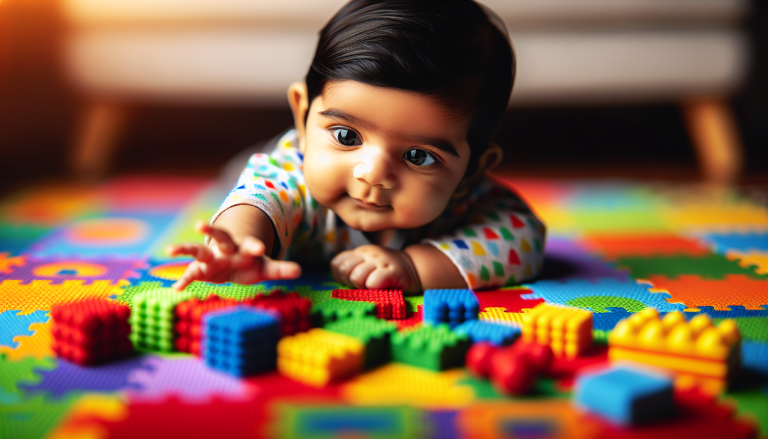
Babies learn colors through a combination of nature and nurture. Genetically, babies are born with the ability to perceive and differentiate between colors. However, their environment and experiences also play a big role in their color recognition skills.
Babies learn colors through repeated exposure. They begin to notice the difference between blue and yellow, for example, by seeing these colors in their toys, clothing, and surroundings. As they grow older and gain more language skills, parents and caregivers can help them put names to the colors they see.
Tips for Helping Babies Learn Colors
————————————
Here are some tips for helping babies learn colors:
1. Provide a Colorful Environment: Surround your baby with a variety of colors. Use bright, colorful toys, blankets, and clothing. Hang colorful artwork on the walls. This will give your baby plenty of opportunities to see and explore different colors.
2. Use Descriptive Language: When you talk to your baby, use descriptive language that includes color names. For example, instead of saying “Here’s your blue blanket,” say “Here’s your beautiful blue blanket.” This will help your baby associate the color with the object and the word.
3. Play Color Sorting Games: Once your baby is old enough to grasp and manipulate objects, you can play color sorting games. Use a muffin tin and some colorful blocks or balls. This will help your baby learn to differentiate between colors and develop fine motor skills.
4. Read Colorful Books: Books are a great way to expose your baby to colors. Look for bright, colorful board books with simple illustrations. As your baby gets older, you can point out different colors and name them.
5. Go on a Color Walk: Take your baby for a walk outside and point out different colors. Say things like “Look at the green leaves” or “See the yellow flowers.” This will help your baby learn to recognize colors in the world around them.
Conclusion
———-
Color recognition is an important part of a child’s development. Babies learn colors through repeated exposure and descriptive language. By providing a colorful environment, using descriptive language, playing color sorting games, reading colorful books, and going on a color walk, you can help support your baby’s color recognition skills. With time, your baby will become more and more adept at recognizing and naming different colors.